Old Money Construct Secrets: 25 Sutras That Kept Wealth Alive for Generations
Not a Marwari-only toolkit. Ancient Indian household wisdom, rewritten for modern times — stability, marriage design, saying no, hot lunch at 1pm, and money as an amplifier of character.

This piece took days of preparation for a reason. If I had brought the original material exactly as it sat in older texts, it would have felt antique. So it has been modified for modern times — rooted in knowledge that is thousands of years old in our country, mixed with modern context, and organised as a formula generation: statements you can treat as सूत्र.
Watch once casually. If it lands, watch again with notes. Mark what you already live, what you can lift tomorrow (low-hanging fruit), and what will feel a little hard. Everything below is relative — identify with what you can, implement what you can. Benefit scales with honesty of application.
These are not “only for business families / Marwaris / Banias / Gujaratis.” Confuse that, and you miss the point. Anyone can install these patterns.

Equal weightage across the list. The top five are marked in the middle of the essay so you do not assume “first = most important.” Stay till the end.
Construct one
Family follows where wealth is created — and stability is the real contribution
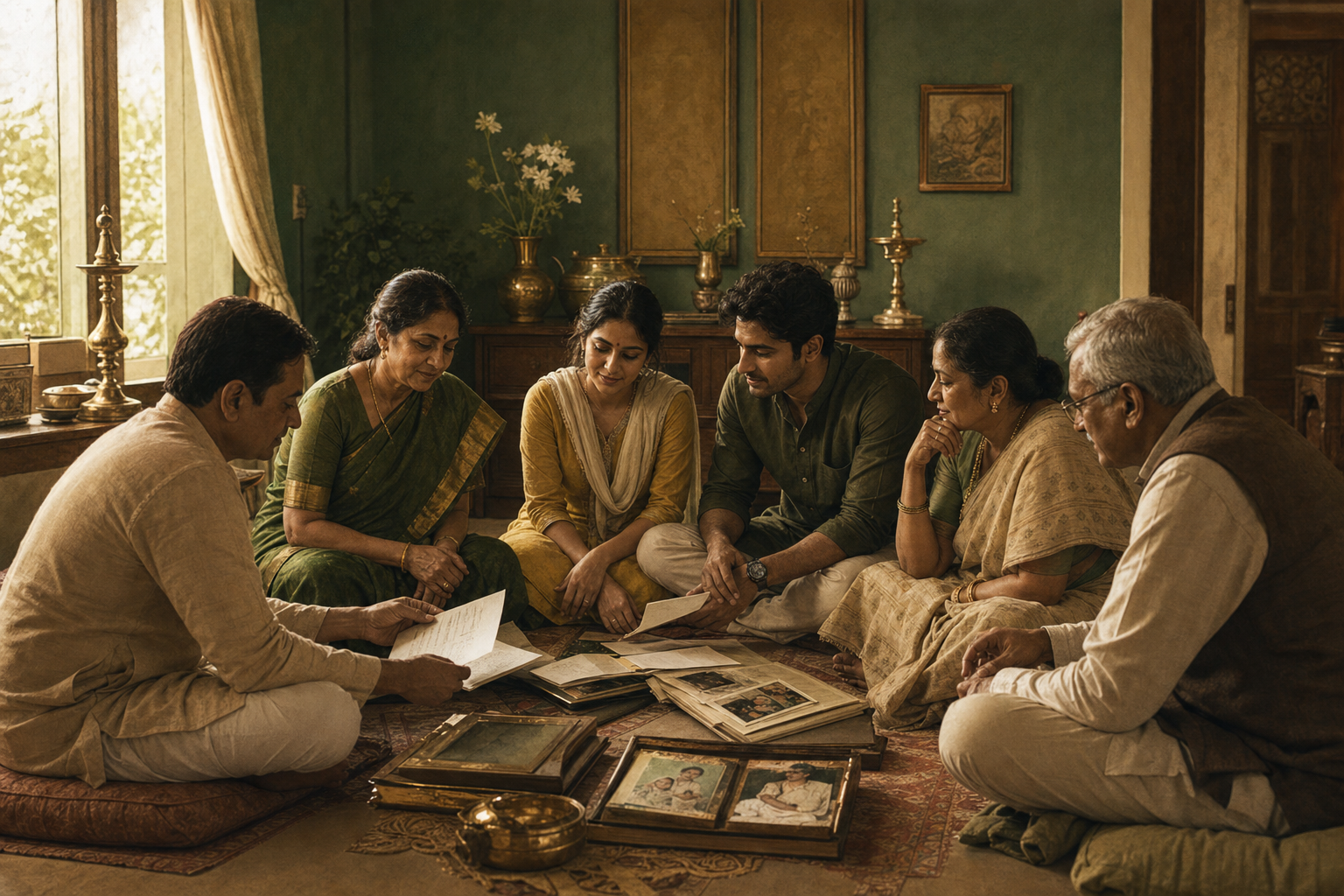
In old-money households, wealth is created, lived in, and carried across generations. The biggest contribution inside that construct is not a stock tip. It is stability — discussed as three things:
 Mind
Stability of mind
Mind
Stability of mind
 Marriage
Stability of marriage
Marriage
Stability of marriage
 Body
Shared physical rhythm
Body
Shared physical rhythm
Walk together. Eat together. Stay locationally coherent when you can. Many government and transferable jobs pour cold water on a hot pan: postings scatter spouses, wealth creation thins, and by 55–67 a “constable” rhythm of survival replaces compounding. First-hand pattern: after a stage, wives stop chasing every posting. Stability of marriage is not romance theatre — it is an economic infrastructure.
Knowledge vs wisdom
They understand the difference between knowledge and boost-up info
Today everyone chases knowledge and confuses info with wisdom. They do not chase systems.
Knowledge is knowing a tomato is a fruit. Wisdom is not putting it in a fruit salad — and actually getting the benefit.

They never argue with fools — and they nip family clash in the bud
Old-money people do not love you with full volume arguments against people who will drag the conversation to their level, beat you with “experience,” and live most comfortably at that level. Intelligent people refuse to fight downhill.
Inside the house: clash in the family is nipped in the bud. Fights can happen on phone, far or near — but they end at the start. There is a cutoff date. You do not reopen “two months ago you said…” as a weapon. Whoever felt hurt must surface it; the head of house and elders address ego, miscommunication, or wrong assumption through a clear chain of command. Communication labels matter: “Your words hurt me — I will speak to X.” After that, people simply do not fight for sport.
Quiet joy, central purchases, diversified bets
- They do not perform happiness on Facebook. If they travel, they enjoy it there. Joy is not a public deposit for validation.
- They are not amazed into spending far from their centre. Extra supply on a distant expressway does not lure them into buying outside their operating radius and means — so the next generation can still hold the area.
- They diversify friends, barriers, and assets. They do not clutch one mutual-fund religion or one commercial “tail.” Slot differently. Cup and difference both matter.
Top most
1st most important — they marry inside community and circle of competence
People will call this anti-modern. Fine — qualify it: love marriage inside community and circle of account is welcome; mismatch marriage is not the design.
When children marry, the question is what the partner brings to the match. Doctor with doctor if possible; if not, someone whose values and skills add to the household atmosphere. Mixed-math couples that fracture the operating system are avoided. Children are taught early: if you love, love with qualification requirements. Liberal — not foolish. Ages 17–23 are shaped with clarity, not vibes.
Fourth most
4th most important — they know how to say no
In any situation, with any timeline, they can refuse. Call it selfish if you want. Their explanation is cleaner: you approached me; I do not owe your requirement. Time, money, favour — whatever it is. Not meeting your need is not the same as attacking you. They know the definition of selfishness better than the people who weaponise the word.

Learning machines, tight capital, no plastic theatre
- Self-esteem from what they know and do well. They are learning machines. Roughly 4–5% of earnings goes to new skills early — spending on self does not feel like a tax.
- They rarely lend money. Their capital already runs ~18–20% return-on-thought. “Uncle will return with interest” is not a strategy. Genuine need may get a gift with eyes open — not a soft loan that freezes relationships.
- Money is earned with fate and effort; lost with foolishness. पैसा किस्मत से कमाया जाता है, खोया बेवकूफी से जाता है. Research and association expand luck; folly destroys it.
- Plastic is not romanticised at home. Close the loop on junk you do not use. Reduce what you can avoid.
- Housewarmings stay small. 5–10 of their own people — not 350 invites to prove a car and a house. Show-off invites the universe to stop the next house. Quiet achievement compounds.
Third most
3rd most important — money is just an amplifier
Money does not invent character. It multiplies it. A foolish person with a windfall becomes a larger hazard. A decent, disciplined person with surplus does more good work. So if you already believe you are “good for the world,” get wealthy faster — because bad people getting rich will not reform society. Good people getting wealthy reforms families and institutions.


Corporate-style family meetings — women included
Weekly or monthly. In person, WhatsApp, Teams — whatever the distance requires. Property status, next moves, suggestions from everyone, collective decisions. Ladies are fully involved and given respect. “How was studies?” alone does not advance a family. Structure does.
Second most
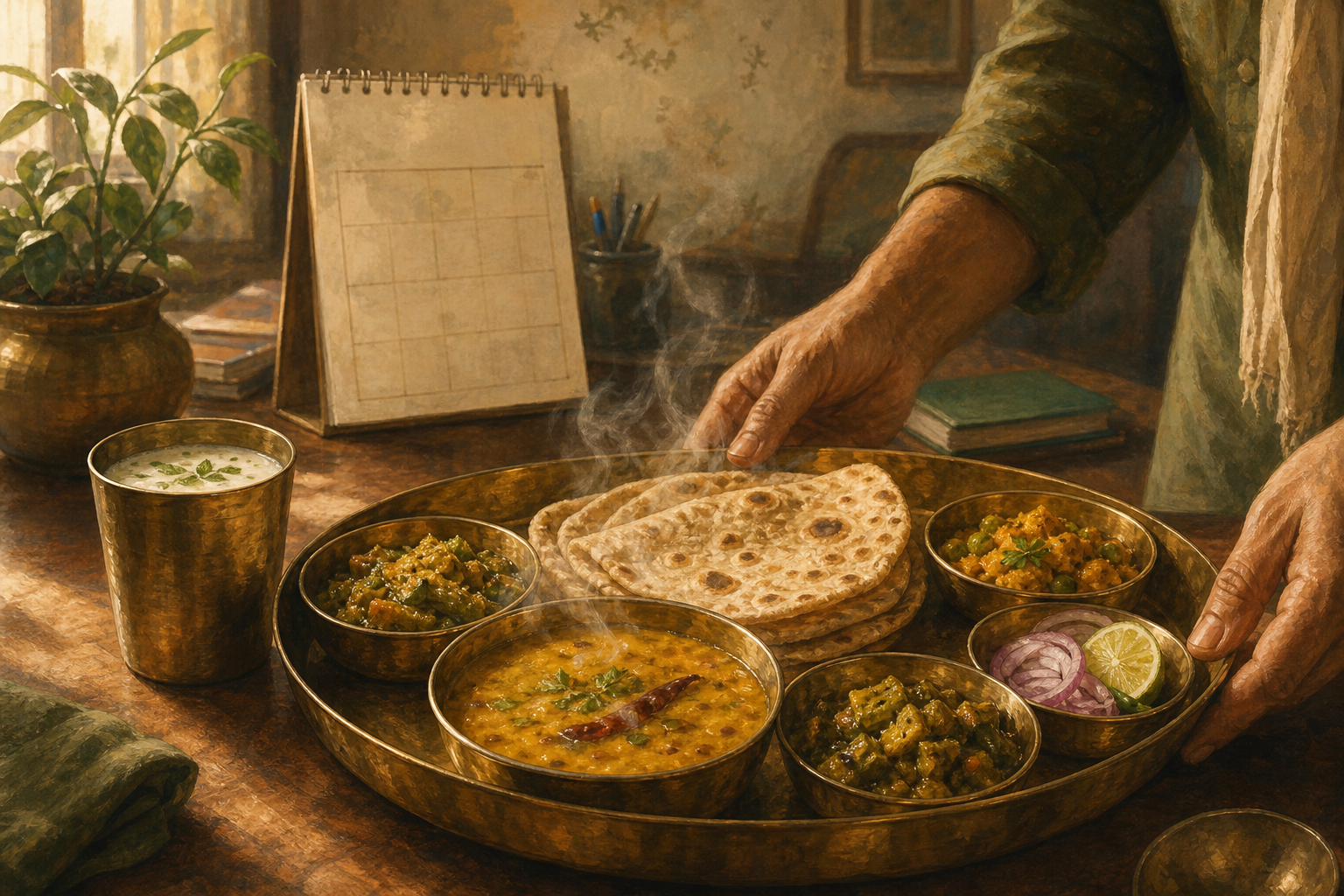
2nd most important — protect the meal, especially by 1pm
They do not eat lunch at 2:30, 3:30, 4:00 as a lifestyle. One o’clock food is non-negotiable. Digestion, disease load, and dignity of labour all sit here. “Boss meeting / compulsion” is the poor person’s permanent story. Poverty’s biggest problem is compulsion — so break it.
I will eat at 1. No doctor’s certificate needed for my boss. I will step out, go home if it is 2–10 km, or eat hot food nearby — but I will eat.
We ultimately work for food. If food gets no respect, expensive clothes only polish a neglected body. Celebrity thalis — tomato, heera, chaas, papad — are not the point. Two rotis gulped between meetings is how lives stall.
Judgment, undergarments, birth times, new members, media diet
- They do not judge at home. “You do your karma; results are yours. Who are we to judge?” Easy to admire, hard to practice. Backbiting burns energy.
- Outer clothes can be normal; underlayers stay excellent. Clean, almost-new, no faded elastic. What touches your skin is a status you keep private — and it quietly lifts confidence. Try it; send feedback.
- Birth times are known across the house — as seriously as stem cells for some families. Channel life-force; stop wasting time guessing.
- Day after wedding, protect the new member. Honeymoon departure, limited “muh dikhai” circus, no forcing the bahu/damaad through endless relative theatre. Make them relax early so they pour life-force into this family.
- Avoid purely negative environments. Fifty-million-subscriber lifestyles that only perform “look at my life” are optional poison. Cricket: prefer highlights after the result over three hours of ads if your time is capital.
How to use this
First pass: feel. Second pass: notes. Circle what you already do. Circle what you can install this week — saying no once, lunch at 1, one plastic purge, one family meeting agenda, one undergarment upgrade. Leave the heavy marital and locational redesigns for a longer horizon, but do not pretend the top five are optional.
The more you understand and implement, the more it benefits you. Equal weightage — and the top five still deserve red ink.
Closing
Old money was never only balance sheets. It was a household operating system: stable minds and marriages, wisdom over info addiction, no downhill arguments, fast conflict closure, quiet joy, local purchases, diversified bets, community-aligned marriage, the courage to say no, learning budgets, tight capital, no plastic clutter, small celebrations, money as character amplifier, corporate family meetings, sacred lunch timing, non-judgment, clean private standards, birth records, protected new members, and a cleaner media diet.
Implement what you can. Share the page if it helps someone in your circle. More mind-maps will follow.