Riding the Trend: The 0–200 Map of Who Gets the Cream and Who Gets the Leftover Milk
Before you ask “which stock?” or “which fund?”, learn where you are boarding the train. Trends reward early observers, punish late skeptics, and always leave another track opening somewhere else.

Funny Reminder Set — Video 3. If you sit with this idea patiently, in a quiet place, you will gain something more useful than a hot tip: a basic money mindset. Because the real disease is not “wrong stock.” The real disease is boarding the wrong coach at the wrong time.
In consultations, people rush me with the same hunger: Tell me quickly — which relative’s tip is good? Which stock? Which mutual fund? My answer is almost always the same.
Do not ask for the destination first. First look at the train. Where are you standing? How much capital do you have? What are you actually boarding?

Advisors narrate. They do not plant the trend.
Any serious trend I use — stocks, careers, marriages, cities, sectors — can be mapped on a scale from 0 to 100, and often stretched to 0 to 200 once the late crowd arrives. An advisor’s role is not to create that trend. A friend who “got lucky” did not plant it either.
When you attach to the right observer, they can tell you: this has already reached here; now it is your call. That is the useful conversation. The useless conversation is: just give me the name.
Stage map
How a trend is born
From zero, a tower of time starts rising. Political, economic, social, and legal shifts open gaps. A government decision lands. A new condition begins forming in the market. At this stage, almost nobody knows what is being built.
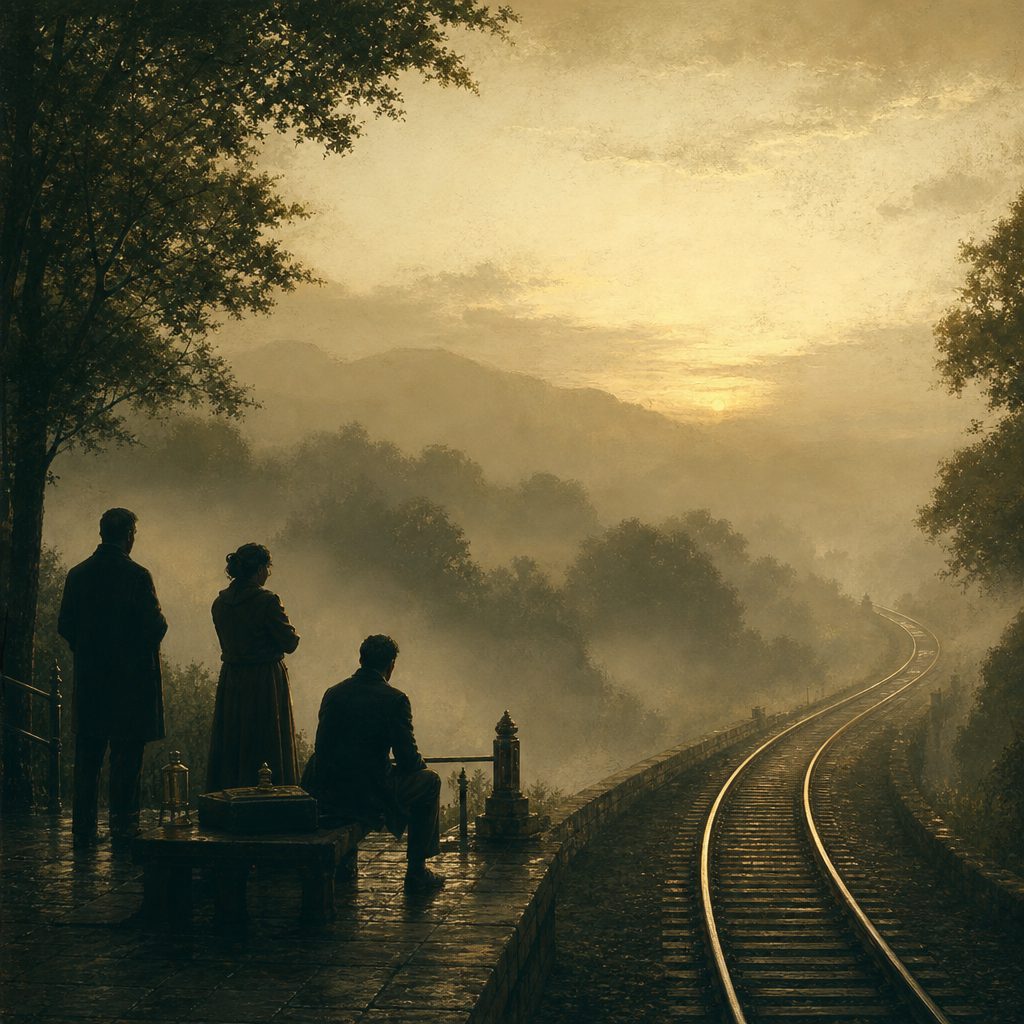 0–20
Conditions & architects
0–20
Conditions & architects
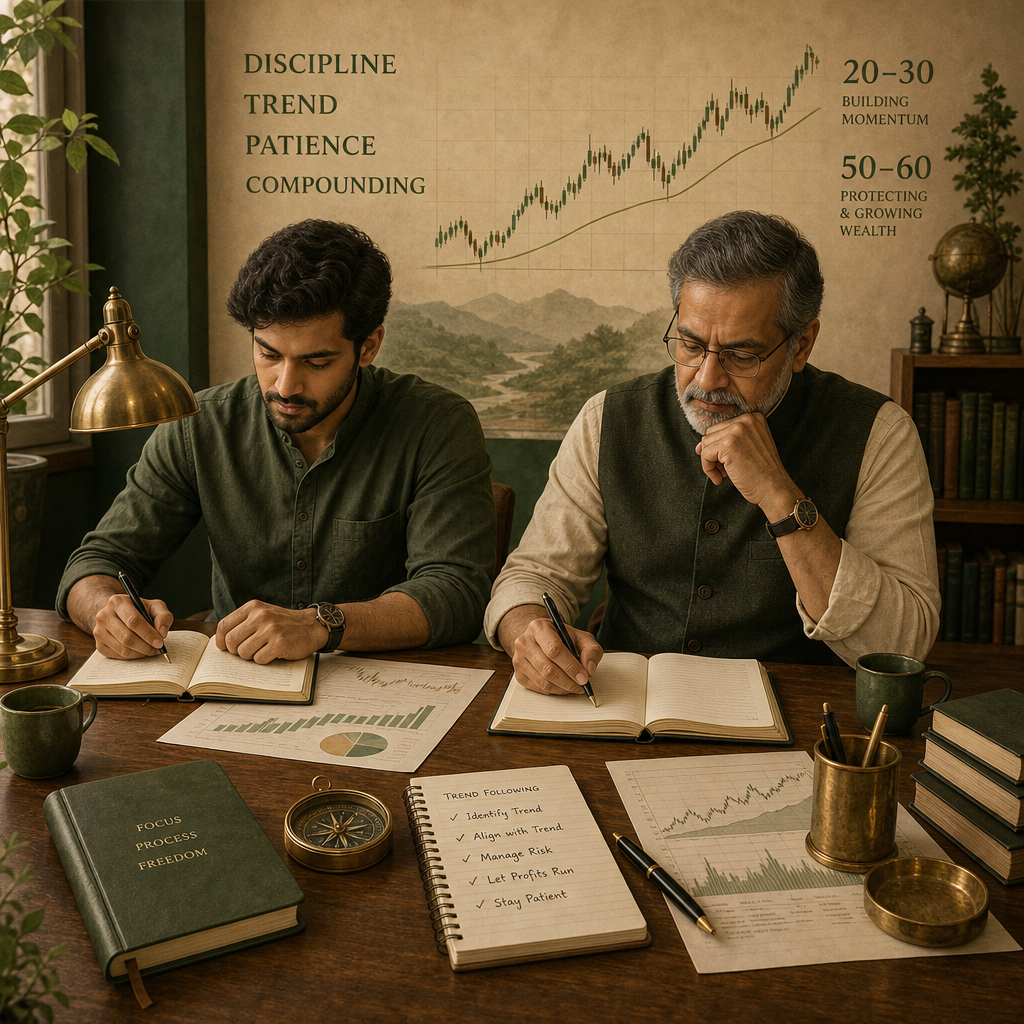 20–60
Conviction builders
20–60
Conviction builders
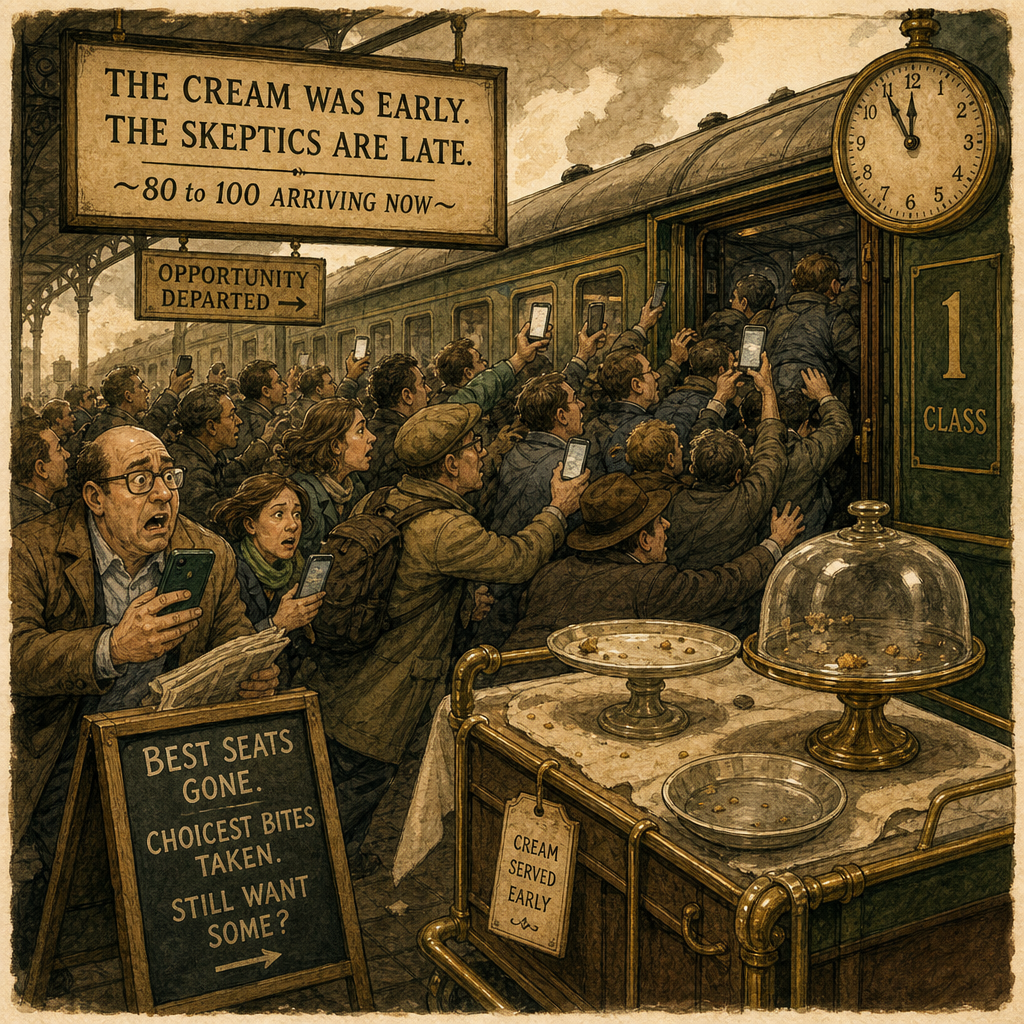 70–200
Noise & exit zone
70–200
Noise & exit zone
0–10: Conditions forming
Nobody has a clean story yet. Only raw conditions. The market influencers, deep capital, and the quiet operators who “run the board” watch these conditions closely. Around a condition, they build a template. Inside that template, they erect a model that can take them up. Roughly here, serious money begins to enter.
10–20 → 20–30: The watchers of the watchers
The next group does not invent the move. They monitor the temperament of the 10–20 people. They have data. They are not loud on groups. They are not scattering their life across noise. They sit quietly and work.
I place myself carefully in this 20–30 bucket — earned with effort, not with theatre. These people often do not live on a conventional job’s interruptions. They protect 5–6 hours of deep work. That is why they can arrive here. If you cannot control your daily routine, you will rarely reach this zone — you may only later support those who did.
Designer always lives in the market. Different sectors rotate — auto, IT, infra, cement, banking — and early observers read second-order effects: if rates move, then what; if policy shifts, then what.
30–40: Believers near the signal
These people may not be tightly interlinked with the architects, but they trust the 20–30 observers — friends, blood relations, prior proof. Many have gained before by following them. On the say of the 20–30 group, they execute. The train gets a little fuller.
40–50: Need-based riders
Basic requirement people. Lucky believers. They attach to the 30–40 layer, usually do not get cheated if they stay near sincere guides, and push the train toward the middle of the track. Around here, the market starts smelling of publicity. When big voices finally “inform the public,” remember:
By the time information reaches you as a mass announcement, the cream has usually already been taken.

The milk metaphor
Think of milk at the buffalo. When you extract it yourself, boil it yourself, drink it yourself — purity is highest there. As milk travels through more hands and more packaging, purity falls and cream thins. Information works the same way. Early proximity keeps the cream. Late narration leaves you watery milk with a strong smell of “news.”
The practical zone
50–60: Professionals who ask three questions
Doctors, engineers, lawyers, chartered accountants — people whose primary attention is their profession. They are not full-time market animals. But they are intelligent enough to ask two or three basic questions, understand the setup, allocate, and return to work.
This is a good game if played cleanly. It is also a kachchi stage in the sense that conviction is borrowed, not lived. Still, I would rather see many households operate honestly in 50–60 than pretend they are 10–20.
Why? Because reaching 30–40 often requires knowing someone who is already inside the retained signal. 50–60 is more accessible if you can ask sharp questions and act without drama.
60–70: Saw it, but no conviction
“This won’t happen.” “Not in my house.” “Not for people like us.” They watch the earlier riders, dabble a little, then freeze. When a moment of clarity finally hits, they often enter clumsily — and sometimes push others in with them.
70–80: Distant observers on leave
Many are physically far — ONGC sites, paramilitary postings, jungle belts, weak internet. They are not foolish. Their problem is timing. On leave, they notice something; before they understand it fully, leave ends. Next leave, they catch a 40–50 story that is already mid-track. Capture is late, not always wrong — but rarely creamy.
Danger zone
80–200: Champion skeptics and the exit bell
Then come the office warriors of disbelief. They live inside devices. Their religion is: past experience will champion skepticism. They argue well. They sound intelligent. They research from a distance and almost never go to the ground.
They will say inventory is too high, related stocks are dead, this city is finished. If someone shares a constructive point, counter-news arrives instantly. Pollution becomes a national headline for Delhi–NCR, but never for Bahadurgarh or Hisar in the same emotional volume. Gurgaon floods for fifteen minutes and the narrative becomes “city is useless” — while Mumbai’s monsoon is treated as destiny and romance.
Hotspots stay hotspots. Narratives are often entertainment for people who will neither buy nor build.
When the 80–100 / 80–200 crowd finally arrives — after the cream has been eaten — they still want to pour more rice into the empty bowl. That is usually when the 10–20 operator has already started converting into the exit camp. The remaining late buyer and late seller play “who is the bigger fool” until fools run out. Then the train descends, and a fresh story starts again at zero somewhere else.
Trends are not only stocks
The same map appears in marriages, jobs, skills, and cities. People who enter an 80–90 skill fad discover the market is already full — “engineering is useless,” “MBA is useless” — because they boarded a completed narrative. Better to take a skill still early on the track, not one your uncle loved ten years ago.
Trends never fully die into silence. When one train cools, another is already leaving from a different platform. Your job is not to worship one train forever. Your job is to know which coach you can honestly afford to board.
What to do with this
- Stop asking only for names. Ask for stage: is this 20–30, 50–60, or 80–100?
- Prefer data points and questions over vibes and WhatsApp certainty.
- Do not romanticize being early if your life structure cannot support 20–30 depth. Aim for clean 50–60 execution.
- When the loudest skeptics convert into buyers, treat it as an aptitude test for exit — not a reason to double down blindly.
- Remember the milk: proximity preserves cream; distance preserves commentary.
You do not need to become a 0–10 architect. You do need to stop becoming a 200 passenger with leftover milk and a loud opinion.
Closing
This is Video 3 in a series meant for tangible takeaways — not satsang that feels good and evaporates. Trends are always playing somewhere: in asset classes, careers, and cities. One sleeve may already be in 50–60; another may still be in 20–30. Curiosity is welcome. Blind urgency is not.
Learn the map first. Then choose your coach. That single habit will protect more capital than any hurried tip ever will.